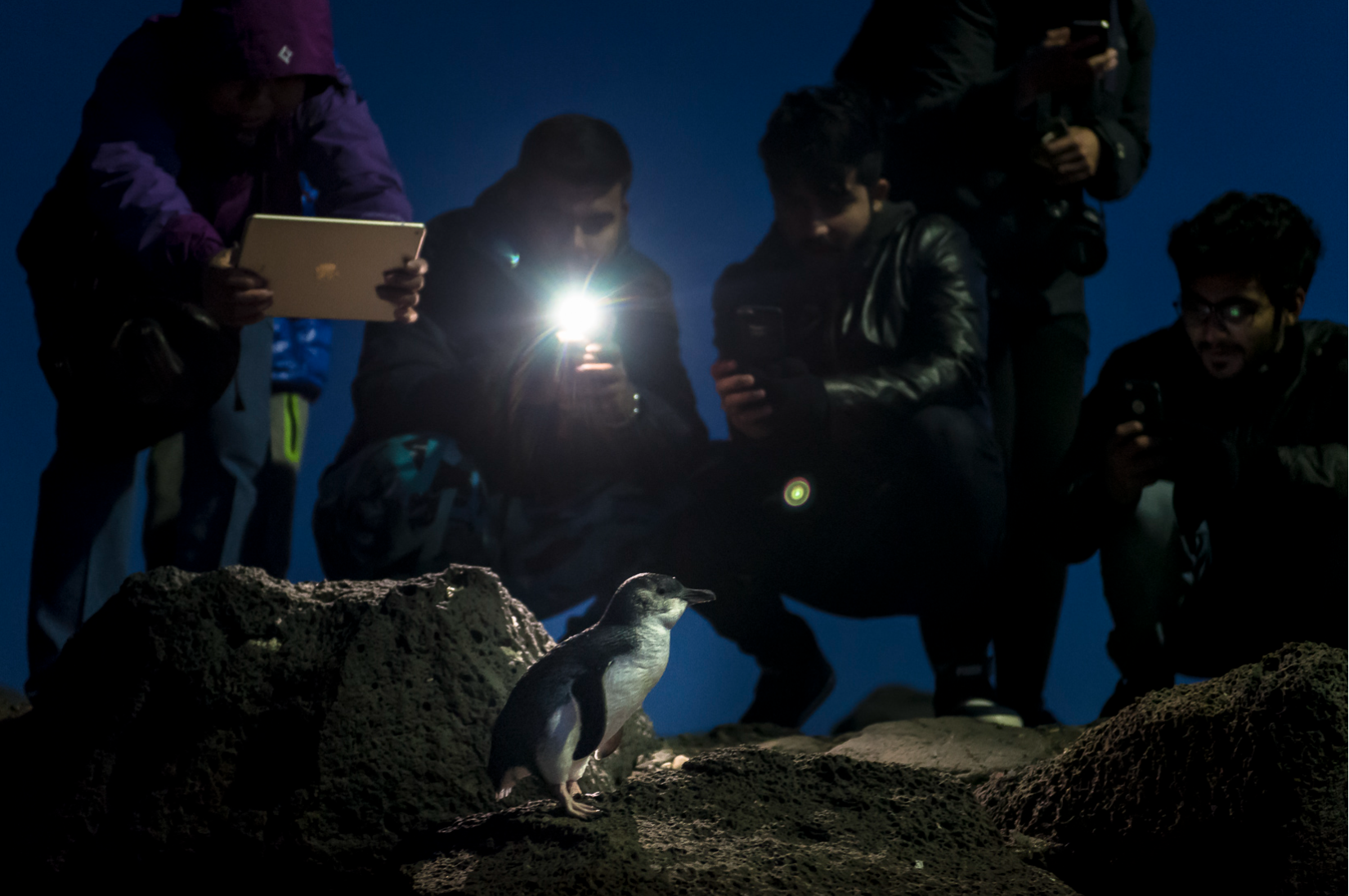
View of the border wall where it meets the Pacific. Photo by Jeff Foott.

John Fanestil greets Mexican citizens through the wall for a Sunday religious service. Photo by Krista Schlyer.

Road cut through the Otay Mountain wilderness to facilitate border wall construction. Photo by Roy Toft.

Aerial view of the Tijuana Estuary, a Wetlands of International Importance. Photo by Roy Toft.

A boy plays in the surf in the shadow of the wall. Photo by Kevin Schafer.
|
 |
"I Hate to See a Fence Anywhere" by Krista Schlyer
January 25, 2009
At a 15 foot steel wall that stands between San Diego in the United States and Tijuana, Mexico, pastor John Fanestil tore up pieces of tortilla to pass through the narrow breaks in the wall to Mexican citizens on the opposite side. Before he began the ritual he has been practicing for three months at this heavily guarded borderline, he noted, how fitting it was that his group met in the shadow of the very first border marker that was ever placed between the United States and Mexico in the 1800s. Since then, there have been many firsts upon this spot on the border, and a tortuous lineage of consequences that have followed them.
In the mid-1990s, San Diego ramped up its border enforcement, one measure of which was to build one of the first stretches of wall along the US-Mexico border. Increased enforcement here did not put a stop to immigration and drug traffic, in fact, after a decade of beefed up infrastructure and enforcement, illegal immigration has increased in the US, and in the San Diego region, millions of dollars continue to be spent to escalate border enforcement. But walls and massive steel fences have had one very concrete impact--they have pushed traffic to remote locations that had been havens for wildlife, and small communities of people looking for some peace and quiet. And in turn, this has bred a new generation of walls and border infrastructure, further impacting the wildife and lands on the borderline.
That's why we're here.
Building walls has led to more walls, and when those don't stop people from being drawn to US demand for cheap labor and drugs, the walls are rebuilt higher, until now we are in the process of building nearly 700 miles of wall, costing billions of dollars over the life span of the structure, with the prospect of continuing construction until it spans the entire length of the US southern international boundary.
This east-west barrier could conceivably span the breadth of North America, in some of the most biodiverse areas of the continent, where north-south migration corridors are essential to the long-term survival of countless species, including jaguars, Mexican gray wolves, ocelots, pronghorn and jaguarundi.
We have started a three week journey, a team of 8 photographers, along with biologists, and a film crew, in order to observe, document and disseminate, a story that began right here in San Diego and has been playing out on the borderlands landscape for more than a decade, with no resolution in sight and a list of casualties longer than the border itself.
In San Diego, over the past two days we have seen Smugglers Gulch, a valley in the coastal hills shared by both border towns, filled with an incomprehensible volume of dirt, in order to facilitate the building of more layers of wall. What was the gulch drains into the Tijuana estuary, a Wetlands of International Importance, as designated by the RAMSAR Treaty. And ecologists here believe the sediment runoff from this massive construction project could doom this rare estuary, a place filled with life and a quiet respite for the people of the region.
We have also visited the Otay Mountain Wilderness, a designated wilderness that the Department of Homeland Security is now using for a staging ground for wall construction, cutting scars of roads in a landscape that was only a month ago a haven for wildlife and people.
And we have seen the wall at its western edge on the Pacific Ocean, where for generations people have come to meet their relatives, picnic, dance, worship, kiss, pass homemade tortillas and play music to each other.
In the 1970s, First Lady Pat Nixon dedicated this spot, Friendship Park. In her dedication she said, "I hate to see a fence anywhere."
We're going to see a lot more fence over the next three weeks, everywhere from here to Brownsville, Texas.
Return to map index
|